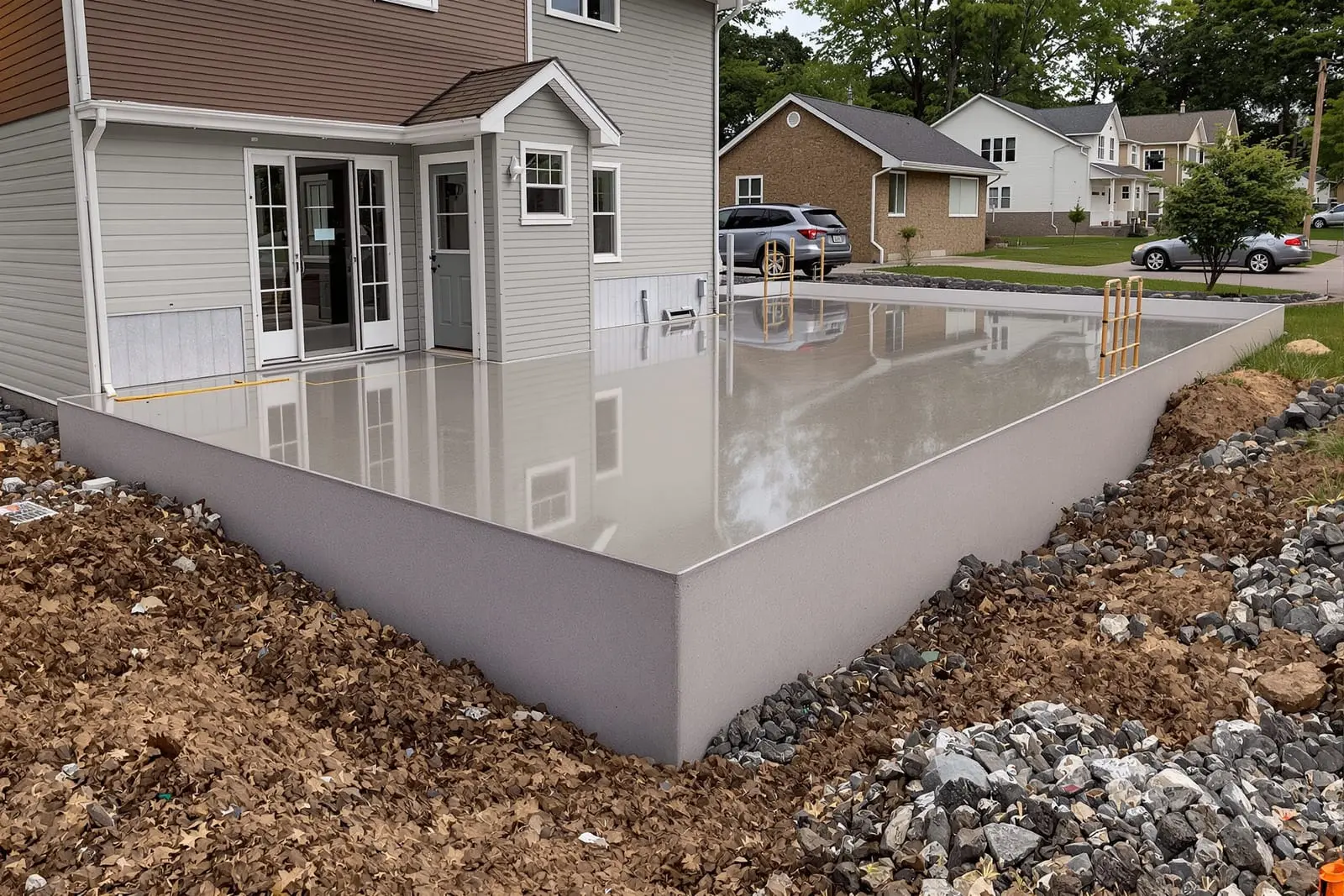
We construct commercial concrete foundations in Miami, FL for offices, retail, industrial, and multi family projects. Our team works from engineered plans to install footings, grade beams, and slabs on grade. We coordinate inspections and maintain strict quality control on reinforcement and concrete placement. Get a foundation partner experienced with Miami codes, soils, and schedules.
Vanguard Concrete Miami provides professional commercial concrete foundations throughout Miami, FL and the surrounding area. Our licensed, insured crew delivers safe, clean, on-time work with a free estimate before anything begins. Call (786) 789-0484 or request your free quote.
Commercial Concrete Foundations Built for Miami Loads and Soil
Vanguard Concrete Miami installs commercial concrete foundations and footings that are sized and reinforced for real Miami conditions: coastal moisture, shallow water tables, and heavy wind loads from hurricanes.
For most low and mid‑rise commercial buildings in Miami, foundations are either spread footings with grade beams, thickened slab foundations, or mat foundations for heavier or irregular load layouts. We review your structural drawings, soil report, and site survey before suggesting anything. Poor fill soils are common on older commercial sites and near former industrial parcels, so we plan footing depth, width, and reinforcement around actual soil bearing capacity instead of just using a rule of thumb.
For retail shells, warehouses, and small medical or office buildings, we typically install isolated column footings tied together with grade beams, then a structural slab or slab on grade above. For restaurants, cold storage, or buildings with heavy mechanical equipment, we may need thicker pads or special vibration‑resistant details. If your project is close to Biscayne Bay or the Miami River, we look closely at potential corrosion exposure and uplift from wind and possible storm surge.
From the beginning, our team focuses on coordination with your architect, engineer, and general contractor. Clear communication around anchor bolt locations, column base plate sizes, and embedded conduit or plumbing helps avoid field changes and delays later. Vanguard Concrete Miami is used to working in tight urban sites in places like Brickell, Wynwood, and Little Havana, where staging and concrete pumping logistics matter as much as the design itself.
How We Install Commercial Foundations & Footings, Step by Step
The quality of a commercial concrete foundation is largely decided before the first yard of concrete shows up. Our process is built around site prep, accurate layout, and practical sequencing that fits Miami job sites.
1. Site evaluation and layout: We walk the property with your plans in hand. We look at existing pavement, adjacent buildings, drainage paths, and truck access. Using a total station or laser, we set control points and establish finished floor elevations that will work with ADA entries, docks, and existing streets.
2. Excavation and soil prep: For most commercial footings in Miami, we excavate to competent soil that matches the geotech report, usually 18 to 48 inches below grade, but deeper in areas with soft fill. We remove unsuitable material, compact in lifts, and, if needed, install a compacted structural fill base. For high moisture areas, we cut in perimeter swales or temporary trench drains so standing water does not weaken the subgrade before the pour.
3. Formwork and reinforcement: Vanguard Concrete Miami builds footing and slab edge forms that follow your details, then installs rebar cages, dowels, and column bars per plan. We pay close attention to cover distances because corrosion risk is higher in our humid, coastal climate. Chairs and spacers keep steel off the soil. Anchor bolts for steel columns and equipment pads are set using templates, so bolt patterns land exactly where your steel fabricator expects.
4. Concrete placement and finishing: For most foundations we use 3,000 to 5,000 psi mixes, often with corrosion‑inhibiting admixtures or a lower water‑cement ratio when specified. In dense neighborhoods we pump concrete from the street to avoid blocking alleys and driveways. Vibrators are used around rebar, embeds, and at column bases to remove air pockets. For slab areas, we strike, bull float, and then power trowel to the finish specified, whether that is a hard‑troweled surface for warehouses or a flatter finish ready for tile or epoxy.
5. Curing and strip‑out: Proper curing is critical in Miami heat. We usually apply curing compound or use wet curing methods to slow moisture loss. Forms come off after the concrete reaches required strength, then we clean, backfill, and rough‑grade so follow‑on trades can begin without delay.
Foundation Design Choices, Materials, and Options for Miami Projects
Most design decisions for commercial concrete foundations and footings are driven by the building use, soil conditions, and budget. Vanguard Concrete Miami walks you through the practical choices so you understand what you are paying for and why.
Concrete mix: For standard retail or office structures, a 3,000 or 3,500 psi mix is often adequate. For medical buildings, heavy storage, or structures in more aggressive coastal exposure, your engineer may specify 4,000 psi or higher, plus supplementary cementitious materials like fly ash or slag to help long‑term durability. We coordinate with local ready‑mix suppliers to meet these specifications without over‑spending on unnecessary upgrades.
Reinforcement: Rebar size and spacing vary by load and footing type. Isolated footings under steel columns may use #5 or #6 bars in two layers, while grade beams and shear walls need heavier steel and closer spacing. Where uplift from wind is a concern, especially on tall or lightly enclosed buildings, the connection between foundation and vertical elements becomes just as important as the footing thickness.
Footing types: Shallow spread footings work for many Miami sites with competent soil. If the soil report shows low bearing capacity or inconsistent fill, your engineer may call for larger spread footings, combined footings, or a mat foundation to distribute loads. Where there is a risk of differential settlement between old and new construction, such as an addition to a 1950s concrete block building, we sometimes coordinate with engineers on underpinning or stepped footing solutions.
Moisture and vapor control: High humidity and frequent rain in South Florida put constant moisture pressure on slabs and grade beams. Depending on the interior finish and use, we may install vapor barriers under slabs, capillary break stone layers, and perimeter drainage details so floor coverings adhere properly and equipment does not rust from below.
Finishes and add‑ons: Many commercial clients choose to incorporate thickened slab areas for future equipment, interior trench drains, or sleeves for utilities during the foundation phase. Thinking through those details before the pour reduces the need for sawcutting and patching later, which saves both time and money.
What Drives Cost for Commercial Concrete Foundations in Miami
Understanding the cost drivers helps you budget realistically and compare proposals fairly. Vanguard Concrete Miami prices our commercial concrete foundations and footings based on measurable factors, not vague allowances.
Site access and logistics: Tight sites in downtown Miami, Coral Gables, or along busy corridors often require concrete pumping, night or early morning pours, and additional traffic control. Easy access sites with room for trucks and staging cost less to build on because production is faster and scheduling is simpler.
Soil conditions: Projects on well‑compacted native soils are more straightforward than sites with undocumented fill or organic pockets. If the geotechnical report calls for over‑excavation, engineered fill, or larger footings to reach acceptable bearing, that extra excavation, material, and time will affect the price. Ignoring the soil report to cut costs is a shortcut that usually shows up later as settlement or cracking.
Rebar and concrete quantities: Heavier buildings, long spans, or high seismic or wind design categories require more steel and higher strength concrete mixes. These are direct material costs. We provide takeoffs so owners and GCs can see where the quantities come from.
Scheduling and phasing: Many Miami commercial jobs are phased to keep part of a property in operation. Working around active parking lots, tenant hours, or strict noise windows adds labor time. We often break pours into multiple phases so tenants can stay open or critical access drives can remain functional.
Change management: One common budget problem is late changes to foundation dimensions, anchor layouts, or embedded utilities. Our approach is to coordinate early and update shop drawings so conflicts are found before forming and rebar installation. When unknowns are likely, for example on older properties where existing utilities are not clearly mapped, we help you plan realistic contingencies instead of lowballing the initial foundation number.
What Miami Owners and GCs Should Check Before Hiring a Foundation Contractor
Commercial concrete foundations are not a good place to gamble on the lowest bid. Before you award the work, there are some specific checks Miami owners, developers, and GCs should make.
Verify local commercial experience: Ask for addresses of completed jobs, not just photos. Look for work in conditions similar to yours, such as coastal exposure, tight urban lots, or expansions attached to older structures. Vanguard Concrete Miami can point to retail plazas, warehouse build‑outs, and mixed‑use foundations around the city where you can see our work in place.
Confirm familiarity with Miami‑Dade code and inspections: Commercial foundations here must comply with Miami‑Dade and Florida Building Code requirements, including wind load, uplift resistance, and, in some zones, flood considerations. Your contractor should be comfortable scheduling and passing footing, slab, and structural inspections without repeated rework.
Review layout and QA procedures: Ask how the contractor handles anchor bolt layout, rebar inspection, and concrete testing. We typically work with independent testing labs for cylinders and slump tests on larger jobs, and we document rebar and embed conditions before the pour. These steps protect both the owner and the GC when the structure is reviewed later.
Ask about crew size and supervision: Commercial footing and foundation work is sequence‑driven. You want a contractor who can field enough experienced carpenters, finishers, and laborers to hit your schedule, supervised by someone who can coordinate with other trades on site. We assign a working foreman or superintendent who stays with the project from layout through final pour.
Discuss weather and contingency planning: Miami’s rain patterns can disrupt poorly planned pours. We check forecasts, plan pour sizes that can be placed and finished within a safe window, and have contingencies for sudden showers such as plastic sheeting and pumps. Asking how a contractor handled their last rained‑out pour will tell you a lot about their readiness.
If you are planning a new build, expansion, or major renovation and need commercial concrete foundations and footings, Vanguard Concrete Miami is available to review your drawings, walk the site, and provide a detailed, line‑item proposal so you know exactly what you are getting.
“
Professional commercial concrete foundations & footings, done right the first time, quality materials, honest pricing, and results that last.
Vanguard Concrete Miami
Commercial Concrete Foundations & Footings Across Our Service Area