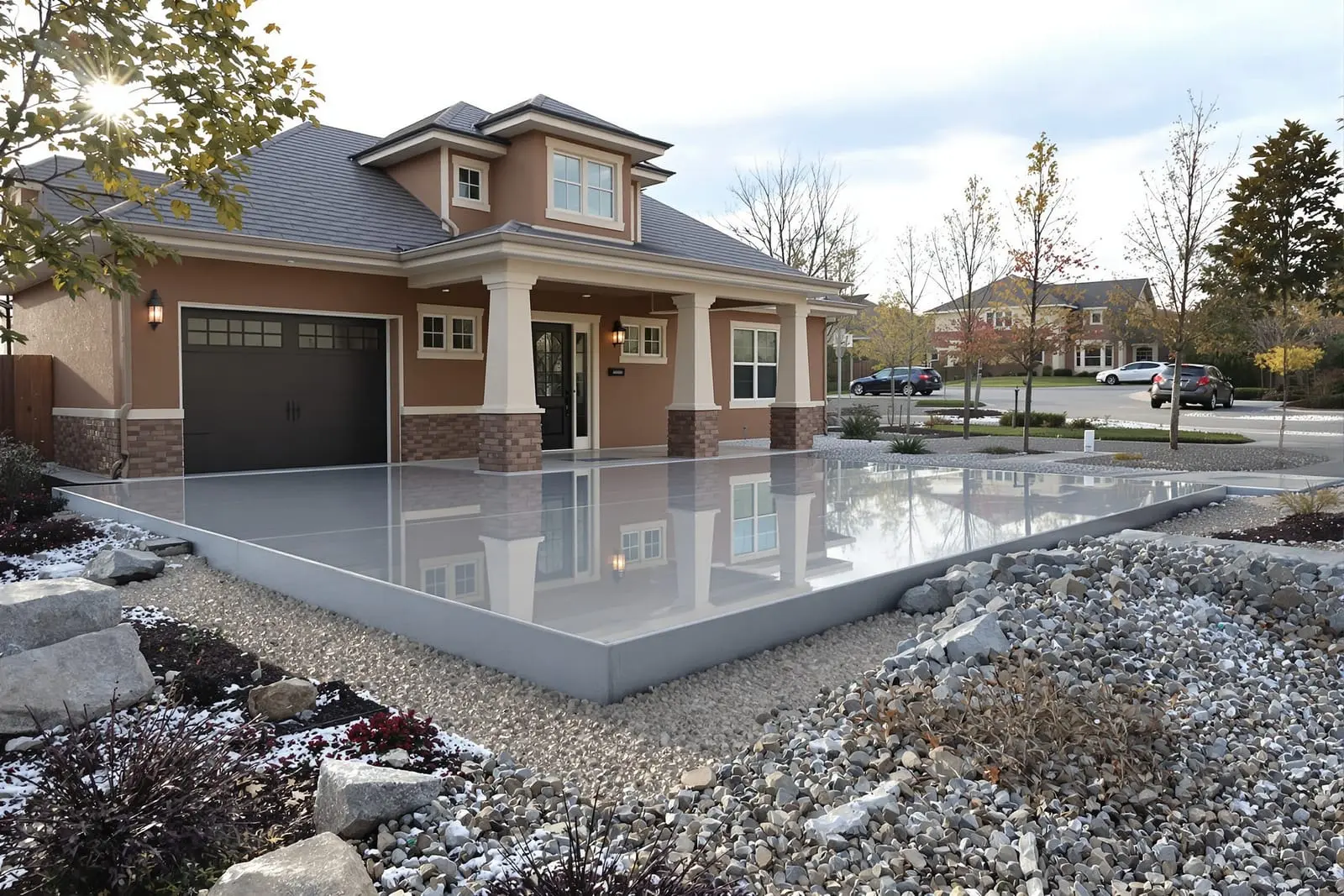
We pour commercial concrete flatwork in Miami, FL for warehouses, loading areas, dumpster pads, and more. Our crews deliver high tolerance slabs with proper reinforcement, joints, and finishes. We work efficiently on occupied sites and new builds. Rely on experienced flatwork professionals for your next commercial slab in the Miami area.
Vanguard Concrete Miami provides professional commercial concrete flatwork throughout Miami, FL and the surrounding area. Our licensed, insured crew delivers safe, clean, on-time work with a free estimate before anything begins. Call (786) 789-0484 or request your free quote.
Commercial Concrete Flatwork for Miami Businesses
Vanguard Concrete Miami installs and repairs commercial concrete flatwork that holds up to heavy use, high heat, and daily traffic in South Florida. We focus on the flat surfaces that keep your operation moving: parking lots, warehouse slabs, loading docks, dumpster pads, walkways, drive lanes, and equipment pads.
Our crews understand how Miami’s climate affects concrete. High humidity, daily rain in summer, strong UV, and coastal salts all influence how we design slabs and choose mixes. When we plan a commercial slab or flatwork project, we account for these conditions from the start. That is how we reduce cracking, surface scaling, and premature wear.
Whether you manage a warehouse in Medley, a plaza in Doral, a restaurant in Brickell, or an industrial yard near the port, we tailor the slab thickness, reinforcement, and finish to the real loads and usage on your site, not just a generic standard.
How We Plan Your Commercial Slab or Flatwork
Reliable concrete flatwork starts with accurate planning. Our process at Vanguard Concrete Miami begins with a site visit, where we look at drainage patterns, existing grades, soil conditions, access for trucks and pumps, and how your business uses the area during the day.
We measure and map the slab layout, note traffic types such as forklifts, pallet jacks, delivery trucks, or heavy containers, and identify any high point loads like rack legs or machinery supports. From there, we calculate slab thickness, joint spacing, and reinforcement that match those loads.
On Miami sites, water management is critical. We design slopes and drain locations so that afternoon storms do not leave standing water near entrances or loading doors. Where needed, we integrate trench drains, catch basins, or tie-ins to your existing storm system, so water exits the slab quickly instead of soaking the base or causing settlement.
We also coordinate with other trades and your operating hours. For active facilities, we often phase commercial concrete flatwork so we keep clear paths for customers, employees, and deliveries while work progresses.
Site Prep, Base, and Formwork That Prevent Future Problems
Many slab problems start under the surface. Vanguard Concrete Miami takes time to build a stable base, which is especially important in South Florida’s variable soils and high water table.
We begin by removing unsuitable material such as organics, soft spots, and debris. If we encounter muck or saturated pockets, we over-excavate and backfill with compactable aggregate rather than pouring over marginal soil. This step is essential near canals or low-lying areas where soil moisture stays high.
Next, we place and compact a graded base, usually a crushed rock or limerock aggregate. Proper compaction is verified in lifts to reduce future settlement or pumping under forklift or truck traffic. Around dumpsters and loading docks, we often increase base thickness because those areas see the highest point loads and turning forces.
Forms are then set to the finished elevations needed for drainage and clearances. We check elevations with lasers, not just string lines, so your slab flows correctly toward drains and away from door thresholds. Before concrete arrives, we install any vapor barriers, sleeves, conduits, anchor bolt templates, and thickened edge details so that the slab and the rest of your build line up precisely.
Concrete Mixes, Reinforcement, and Joints for Heavy Use
For commercial concrete flatwork in Miami, we select mixes that balance strength, workability, and durability in high heat. Typical compressive strengths range from 3,500 to 5,000 psi, with higher strengths or special admixtures for heavy industrial or marine-adjacent sites.
We often specify low water-cement ratios along with plasticizers so the concrete remains workable for placement without adding site water, which weakens the slab. Where exposure to chlorides or fertilizers is likely, we consider supplementary cementitious materials to improve resistance to surface scaling and chemical attack.
Reinforcement choices depend on your use. Light duty slabs may use welded wire reinforcement, while warehouse and loading areas commonly receive rebar grids or a combination of rebar and dowels at joints. For slabs that support racks or machinery, we carefully detail reinforcement around columns and base plates to limit cracking under concentrated loads.
Control joints and expansion joints are laid out before we pour, not improvised afterward. In Miami’s heat, concrete shrinks and moves more aggressively, so correct joint spacing and timely saw cutting are essential. We plan joint locations to align with rack aisles, door openings, and traffic paths to reduce impact, rocking edges, and maintenance issues.
Placement, Finishing, and Curing in Miami’s Climate
Placing and finishing concrete in South Florida requires tight control of timing, especially during hot, sunny, or rainy conditions. Vanguard Concrete Miami schedules pours to avoid the worst heat when possible and uses curing practices that slow moisture loss.
Our crews place concrete using chute, pump, or conveyor, then strike off and bull float while maintaining the correct slab thickness. We use vibrating screeds or internal vibrators where required to remove air pockets and consolidate around reinforcement and embedded items.
Finishes are chosen to match the function. For parking lots, drive lanes, and sidewalks, we often use a broom finish to provide traction in wet conditions. For interiors or forklift aisles, we can provide a hard trowel finish, densified surfaces, or special treatments to reduce dusting and improve abrasion resistance.
Curing is where many shortcuts occur in this region. We apply curing compounds or use wet curing methods so the surface does not dry too quickly in the Miami sun. Proper curing reduces random cracking, improves surface hardness, and increases long term durability, which is especially important for high traffic slabs and flatwork.
Common Issues in Miami and How We Prevent Them
Commercial concrete flatwork in Miami faces several recurring challenges that we address directly in our designs and methods.
Thermal and shrinkage cracking is common when slabs are poured without proper joints or curing. We prevent this by planning joint spacing, cutting joints at the right time, and managing the water content and curing of the slab. If minor cracking still occurs, we evaluate whether it is structural or cosmetic and recommend realistic repair options.
Poor drainage is another frequent complaint. Ponding water accelerates surface wear and can push fines out of the base, causing settlement. Our grading plans and drain placements are aimed at moving water off the slab quickly, not just meeting a paper slope number. On retrofit projects, we may sawcut sections, re-pour with new elevations, or add surface drains to fix existing ponding.
Edge failures happen near docks, dumpster pads, or where trucks cut corners. To avoid this, we thicken slab edges, improve base in those locations, and sometimes include steel edge protection or curbs. For coastal or exposed sites, we pay attention to salt exposure and recommend sealers or coatings when appropriate.
Because Miami’s construction schedules are often compressed, we also help clients balance speed with performance. We can use accelerators or high early strength mixes where needed, but we are clear about the tradeoffs and how to protect young concrete from overload.
What Drives Cost and How to Get an Accurate Quote
The cost of commercial concrete flatwork in Miami is influenced by more than just square footage. Vanguard Concrete Miami builds quotes around five main factors: thickness and strength of the slab, reinforcement type, site conditions, access, and finish or special treatments.
Thicker slabs or higher psi mixes cost more in material, but they may save money in the long term by reducing repairs under heavy loads. Reinforcement choices such as rebar, dowel baskets, or fiber reinforcement change both material and labor costs. Difficult access that requires pumping, night work to avoid business disruption, or complex phasing can also affect pricing.
Existing site conditions matter. If your property has poor soil, hidden utilities, or standing water, we may need additional excavation, base material, or dewatering. These are common situations in older industrial areas and near canals in Miami.
To get an accurate proposal, be ready to share how the area will be used, typical vehicle loads, any future expansion plans, and your operating hours. We will walk the site, take measurements, and provide a detailed scope so you know what is included: prep, thickness, reinforcement, joints, curing, and any sealing or striping. Our goal is to give you a commercial slab or flatwork solution that suits your operations, not just the lowest initial number.
“
Professional commercial slabs & flatwork, done right the first time, quality materials, honest pricing, and results that last.
Vanguard Concrete Miami
Commercial Slabs & Flatwork Across Our Service Area