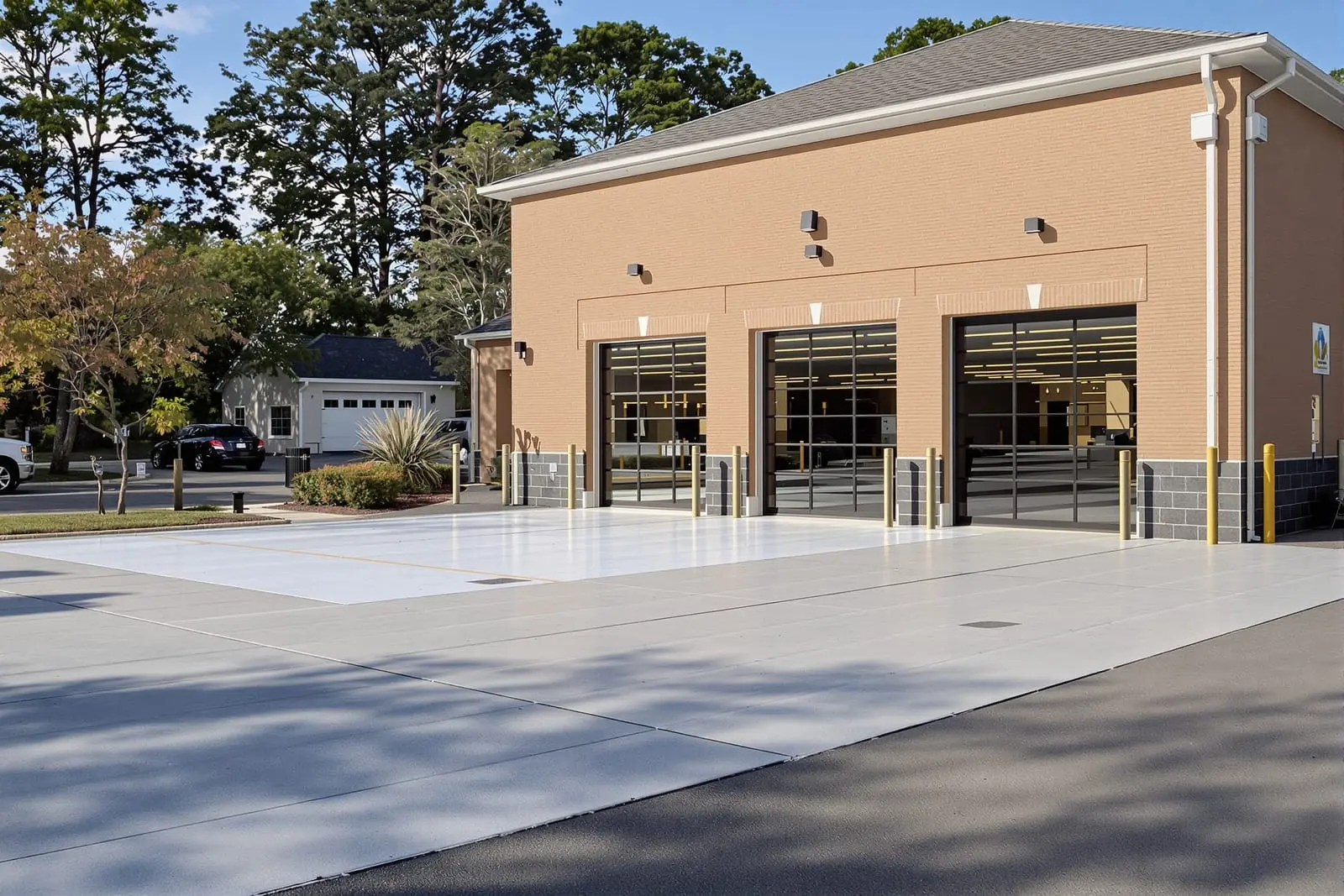
We construct loading docks and commercial concrete slabs in Miami, FL for warehouses, retail centers, and industrial facilities. Our slabs are engineered for heavy truck loads, dock levelers, and equipment traffic. We focus on joint layout, reinforcement, and proper elevations to match dock heights and doors. Whether you need exterior pads, staging areas, or interior commercial slabs, we deliver concrete surfaces built for daily operations.
Vanguard Concrete Miami provides professional commercial concrete slab throughout Miami, FL and the surrounding area. Our licensed, insured crew delivers safe, clean, on-time work with a free estimate before anything begins. Call (786) 789-0484 or request your free quote.
Durable commercial concrete slabs and loading docks for Miami businesses
Vanguard Concrete Miami builds commercial concrete slabs and loading docks that are tailored to South Florida conditions and to the way your operation actually runs. Whether you are receiving daily freight at a warehouse, loading refrigerated trucks behind a restaurant, or expanding a distribution center, the slab and dock layout affect everything from safety to forklift maintenance.
We start every project with a site walk and conversation about how you use the space. We ask about truck sizes, turning movements, pallet jack paths, storage racks, dock levelers, and drainage issues you may have seen during heavy rain. This local, operations-first approach lets us design concrete thickness, reinforcement, and joint layout that match your real traffic patterns instead of a one-size-fits-all template.
Because we live and work in Miami, we also factor in local issues like high groundwater, salt exposure, and afternoon storms. Our goal is a loading dock or commercial slab that stays functional and safe for years, not one that looks good for a few months then starts cracking or ponding.
How we design commercial concrete slabs for real loads
A commercial concrete slab is only as good as the design behind it. At Vanguard Concrete Miami, design starts with load calculations tied to your actual equipment and traffic. We look at axle loads from box trucks and semis, forklift capacities, rack leg loads, and whether you will add machinery later. From there we determine slab thickness, concrete strength, and reinforcement style.
Typical interior warehouse slabs in Miami fall in the 5 to 8 inch range with 3,000 to 4,000 psi concrete. Heavy loading dock aprons or exterior truck courts often require 8 inches or more with higher psi mixes and doweled joints at key transitions. We select rebar, welded wire mesh, or fiber reinforcement based on how the slab will be used and whether you prefer fewer control joints for lift truck comfort.
We also pay close attention to curl and joint layout because these are big maintenance issues for Miami facilities. Poorly designed joints can chip and break under forklift traffic, creating trip hazards and vibration that wears out equipment. We space joints and select saw cut timing to control cracking while keeping joints away from high-impact wheel paths where possible.
Subgrade preparation and drainage in Miami’s soil and rainfall
In South Florida, the ground beneath your slab is just as important as the concrete you see on top. Our crews at Vanguard Concrete Miami start by evaluating existing soils and fill. Many Miami commercial sites have areas of loose fill over limestone or pockets of organic material. If we pour over that without correction, you can expect settlement, cracking, and rocking slabs.
We remove unsuitable material, compact in thin lifts, and use a density target appropriate for your expected loads. In many loading dock and truck court areas we recommend a stabilized base such as compacted limerock to reduce pumping and rutting under truck tires. When groundwater is shallow, we coordinate elevations carefully so the slab does not sit in water after storms.
Drainage is a major factor because Miami gets intense rainfall. For exterior commercial concrete slabs and dock aprons, we build slope into the slab and tie it to trench drains, inlets, or swales so water moves away from doors and dock levelers. Inside warehouses we look for places where water might blow in under doors. With the right slope and joint sealants, you reduce slip hazards and protect inventory and equipment from recurring moisture problems.
Concrete mixes, reinforcement, and finishes that handle Miami’s climate
Concrete used for loading docks and commercial slabs in Miami needs to handle high temperatures, humidity, and in some areas salt exposure from coastal air. Vanguard Concrete Miami works with local ready mix suppliers to specify mixes that have the right strength, aggregate, and admixtures for your application and budget.
For exterior slabs that see truck traffic, we often recommend mixes with air entrainment and a lower water-to-cement ratio to improve durability. On interior warehouse floors, we may add fibers to help control shrinkage cracking and improve impact resistance without increasing slab thickness. Reinforcement is selected not just for strength, but also for constructibility, so steel is placed at the correct depth instead of sinking to the bottom.
Surface finish matters too. On loading dock ramps and exterior aprons we usually use a broom or textured finish for traction, especially when tires or shoes are wet from summer downpours. Inside, where forklifts operate, we typically finish to a flatter, smoother surface that meets the tolerances your racking system or equipment requires. If you plan to use epoxy or traffic coatings later, we discuss surface profile and curing methods ahead of time so the slab is ready for those systems.
The build process for loading docks and dock leveler areas
Loading docks are more complex than a simple flat slab. Vanguard Concrete Miami regularly coordinates concrete work with dock levelers, bumpers, railings, and overhead doors so you do not end up with mismatched elevations or awkward transitions.
We start by verifying dock heights against the truck types you receive and against the finished interior floor. We then form the dock face, recesses for pit-style levelers or edge-of-dock levelers, curb details, and any wheel guides or bollard foundations. Rebar is carefully tied and doweled into adjacent structures so impact from trucks and forklifts transfers properly.
Concrete is placed in stages where needed so critical edges and recesses are tightly controlled. We pay attention to consolidation around embedded angles, anchor bolts, and leveler frame pockets so there are no voids. After the pour, we protect fresh concrete from traffic and from rapid drying in hot weather, then return to saw-cut control joints at the right time to manage cracking. This detail-oriented approach keeps dock hardware sitting square and operating smoothly, which reduces maintenance calls later.
Scheduling, permitting, and working around active operations
In Miami, timing for commercial concrete slab and loading dock work is shaped by both weather and your operations. Vanguard Concrete Miami typically recommends scheduling larger exterior pours outside the peak of hurricane season when possible and targeting early-morning placements to beat heat and afternoon storms. Cooler morning temperatures help concrete set more evenly and allow better finishing.
For active facilities, we coordinate phasing so you can keep operating. That may mean building one half of a truck court at a time, creating temporary access paths, or setting up weekend or night pours where city rules allow. Before work starts, we review traffic control, temporary signage, and safety barriers so your staff and drivers know how to move through the site.
Permitting requirements vary by municipality in Miami-Dade County. For most structural slabs, docks, and new building additions, stamped engineering and permits are needed. We assist with plan sets, engineering coordination, and inspections, and we schedule pours only after approvals are in place. This reduces the risk of rework or delays due to compliance issues.
Costs, common problems, and how we help you avoid them
The cost of a commercial concrete slab or loading dock in Miami depends on more than just square footage. Thickness, reinforcement, site conditions, access for trucks and pumps, and the amount of forming and demolition all play a role. Vanguard Concrete Miami provides itemized proposals so you see where your budget is going, from subgrade prep and base rock to concrete, steel, and finishes.
We also talk openly about where it makes sense to invest more. For example, upgrading slab thickness or reinforcement in high-traffic dock aprons can significantly extend life and reduce patching costs. Proper drainage and joint detailing may add a little to initial cost, but they prevent ponding, spalling, and slab movement that can shut down a dock lane.
Common issues we are called to fix on older Miami facilities include cracked and settled dock aprons, heaved slabs at door thresholds, joint edges breaking under forklift wheels, and poor drainage leading to slippery algae growth. When we are building new work, we design and construct to avoid those failures. When you need repairs or replacement, we analyze the cause first, then propose targeted solutions, such as partial-depth repairs, slab replacement with better base preparation, or reconfigured slopes and drains, so you are not paying for the same fix twice.
“
Professional loading docks & commercial slabs, done right the first time, quality materials, honest pricing, and results that last.
Vanguard Concrete Miami
Loading Docks & Commercial Slabs Across Our Service Area